May 30
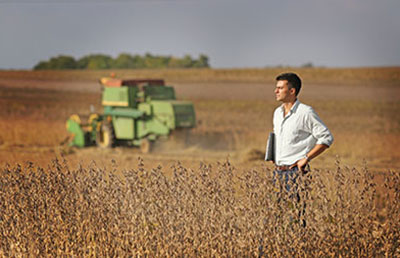
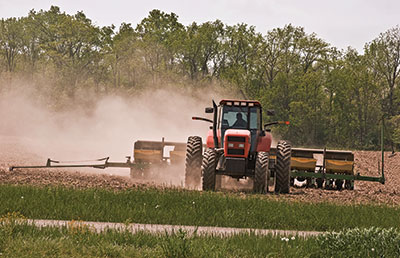
One of my favorite memories of my childhood is riding the combine with my dad every harvest season. A very early slides shows me sitting on my father’s lap sound asleep on his 1950 era Massey Ferguson combine. This combine only lasted one harvest season since it was not a Hillside model. He upgraded to an International 151 and from thereon out, I was on that machine (and the subsequent 403 and 453) with my dad from morning to night. He must of had the patience of Job since I am sure I was a handful (according to my wife, things have not changed much).
Starting at about age 15 I became a full-time operator of the combine and although my parents “paid” me by putting me through college, buying a car, etc., they failed to do it properly for tax purposes. Instead of issuing a W2 to my brother and I for the work we performed, they simply paid for certain items and never ran it through the farm.
The correct way to do this is to issue a W2 to your children based upon an appropriate wage for the services they perform. These wages, although reported on form 943 and a W2, are not subject to any payroll taxes (assuming you are sole proprietor farmer) as long as the child is under age 18. The wages are also fully deductible by the farmer against their farm income and does reduce self-employment tax.
The child can earn about $6,000 and not have to file a federal return or pay tax (in some states, they may owe some state income tax). Another nice feature is that these wages qualify for contributions to a ROTH IRA and if they invest those funds until retirement it can grow to quite a nice nest egg. For example, assume the child earns $20,000 from age 15 to right before age 18. The farmer would save about $8,000 in income and self-employment taxes and the child would owe no income tax and if invested in a ROTH at 6% until age 68, this $20,000 would grow to about $320,000 of after-tax wealth. Not too bad of a return.
Remember, if you have kids under age 18 that help you on the farm, pay them.
Paul Neiffer, CPA
Categories: Farm Industry Trends, Farm Leadership, Farm Taxes
Tags: farm kids
May 29
As I type this post, December corn futures are currently trading at $5.59 and November beans futures are at $12.84. Both of these prices are within a few pennies of the spring price that was set based on the average February prices of these futures contracts ($5.65 and $12.87, respectively). It is interesting that after 3 months of trading that both contracts are within this range.
Now that these prices are getting back to these levels, are you upgrading your 2013 crop budgets to determine if you need to hedge any of your bushels that are not covered by crop insurance. Although weather may push prices higher, a couple of weeks of good weather can push them lower too. We are not recommending a hedge, but rather, check your budget to see if hedging part of your crop at these prices makes sense.
We see too many farmers that try to get $13 or $8, when the price is with a few pennies of this price and a month later, the price is a $1 or $2 lower.
Remember, you are in the farming business and when you can hedge in a good profit, it may be prudent to do.
Paul Neiffer, CPA
Categories: Commodity Marketing, Farm Industry Trends, Farm Leadership, Farm Operations
May 28
The State of Minnesota just passed a new Tax Bill that will raise approximately $2.1 billion in new revenues. Almost all segments of business and individuals are affected by the new bill.
Our firm has provided a recap of the major changes that can be accessed here. As a result of these changes, many Minnesota farmers that have cash rent income for 2013 could very easily be in a combined 50% or higher tax bracket.
This is comprised of the following items:
- Highest federal rate of 39.6%
- Net investment income tax rate of 3.8% on their cash rents
- Minnesota top tax rate of 9.85%, and
- Most likely an effective 1% extra sur-tax related to the phaseout of itemized deductions.
If you add all of these tax rates together, you get an effective rate of 54.25%. The actual rate may be a little lower due to state taxes being deductible for federal purposes, but the final combined number is very close to or exceeds 50%. This top tax rate of 9.85% is now one of the five highest in the Country (still has a way togo to catch up to California’s 13% plus rate).
Additionally, if a farmer in Minnesota has an entity that is subject to the Franchise Tax, this is expected to almost double in some cases. For example, if the combined property, payroll and sales of the entity $9.5 million, the old Franchise Tax was $1,000. The new Tax is $,870.
The bill contained 552 pages and many other tax increases were enacted. Will your state be next.
Paul Neiffer, CPA
Categories: Farm Industry Trends, Farm Taxes
Tags: Minnesota Tax
May 23
The USDA in their Amber Wages April 1 issue had a very interesting article on the make-up of beginning farmers using 2011 data. I naturally assumed that most of these “beginning” farmers were less than 35 years of age.
It turns out that this segment only comprises 14% of total beginning farmers. The largest segment was age 50-64 totaling 40%. After reviewing the article further, it became apparent that these older beginning farmers still had very active non-farm income that allowed them to become new farmers. The younger farmers, on averge had higher income and acreage from farming than older farmers. 11% of beginning farmers under age 35 had sales of more than $250,000 while only 6% of the 35-50 age group had this level of sales and only 1% of the 50 and over group were able to achieve this level.
With the rapid increase in land prices, younger farmers will need to get even more creative in beginning their careers in farming, but we know they will figure out a way. They have in the past and will do so in the future.
Categories: Ag Policy, Demographics, Farm Industry Trends
May 22
The Kansas City Federal Reserve just released a workpaper entitled “Farm Investment and Leverage Cycle: Will This Time Be Different?”.
The article describes the four major farm cycles that have occurred since 1900. The first cycle begin in 1910 and ended in 1940. The First World War caused farm prices to rise dramatically which led to an increase in farmland prices. Once the great depression started, this increase in farm land prices was mostly wiped out and many farms went bankrupt.
The second cycle began in 1940 with the start of World War II and continued to until 1960. Real farm income tripled from 1940 to 1943 causing a resulting increase in land prices. However, unlike any other farm boom cycles of the last 100+ years, this cycle did not end in any type of bust.
The third cycle started in the early 1970s and ended in the late 1980s. With the rapid increase in crop prices due primarily to the US-Russia grain pact, farmland prices started to rise dramatically. There were other inflation pressures during this period that also help cause the increase. As prices rose, farmers continued to expand with more debt than was proved prudent. This led to the crash of the 1980s that really took at least 15 years or more to recover from.
This brings us to the latest cycle that started in 2005. Many factors led to increased crop prices (ethanol, China, etc.) and this cycle is still in process. The authors indicate that things still look good, but if there is a dramatic drop in land prices and if the debt to asset ratio crosses over 20% again (like the 1980′s), then we will have a bust to end the cycle. However, if this ratio stays at 17% or lower, then we will not have a bust (similar to the 1940-60 cycle). The ratio (using their definition) is currently at 10% which is the lowest it has been since the mid 1950s.
The authors are not predicting a bust but are letting us know the parameters that may cause one. It will be important to watch these signals and be ready to respond accordingly.
Paul Neiffer, CPA
Categories: Ag Policy, Commodity Marketing, Demographics, Farm Industry Trends
May 21
There is a provision in the Income Tax Code that disallows certain farm losses that are in excess of $300,000 (or the aggregate farm income for the last 5 years). This excess amount is not allowed in the current year, but is carried forward and allowed as a deduction in the next tax year (assuming you still meet the requirement in that year).
This provision only applies if the farmer is receiving any direct or counter cyclical payments under Title I of the 2008 Farm Bill (as extended last year). The proposed 2013 farm bills by both the Senate and Congress eliminates these payments, so there is a strong chance that after passage of this farm bill and full implementation that this provision will no longer apply.
We have seen several of our clients that were unable to fully deduct their current farm loss even though they had received less than $5,000 in direct payments. The farmer does not lose this deduction, but simply carries it forward.
Also, with the drought last year, any expenses that are a direct result of the drought are not included in the calculations for this limitation.
We will keep you posted if this provision no longer applies.
Paul Neiffer, CPA
Categories: Ag Policy, Farm Industry Trends, Farm Taxes
Tags: excess farm loss
May 20
Gladstone Land Corporation (LAND) just recently raised $50 million in their IPO at a $15.50 price to invest solely in farmland. To date, they have purchased acreage in California and Florida (primarily berry related) and just closed on a blueberry farm in Michigan. Since its IPO, the price has increased almost 10% to close at $16.80 on May 20, 2013.
The company intends to elect Real Estate Investment Trust (REIT) status which allows the company to pay no income taxes assuming at least 90% of its taxable income is distributed as dividends each year. In reviewing their balance sheet, it does appear their farmland purchases to date are fairly leveraged. As of March 31, 2013, they have incurred total purchases of about $40 million with almost $30 million of long-term debt. Their current long-term debt bears interest at 3.5%, but is scheduled to reset in another year or so.
Their margin is in good shape now, however, if rates rise a couple of points, it may be difficult for them to maintain their expected dividend payout.
I have seen many private farmland investment funds get capitalized over the last few years, but this is the first publicly traded farmland REIT in the US that I am aware of. There are many similar companies in Europe and Asia. Normally, if we see a flood of these type investments on the public market, a top in the market may not be far off. We shall see.
Paul Neiffer, CPA
Categories: Farm Industry Trends, Land
Tags: reit
May 16
After the House passed their Farm Bill today, it appears that their version on the Senate version are not too far apart. The key points for both are:
- An elimination of all direct farm payments
- A reduction in CRP acreage to either 24 or 25 million acres
- Consolidation of many farm programs
- A Price Support program that guarantees a farmer a minimum price for their crop, or
- A Revenue Program that a farmer can elect (they have to elect one or the other).
The Price Support program is either based on a price set by Congress (the House version) or based on the average Olympic average of the prior 5 years of prices (the Senate version). If a farmer elects the Price program, they cannot participate in the Revenue program and vice versus.
A couple of key differences is a payment limitation in the Senate of $50,000 per person for the Senate and $125,000 for the House.
The Senate also eliminates these payments if your adjusted gross income is over $750,000 while the house boosts this to $950,000. This will most likely make the accounting simpler than it is now since you will most likely only need to look at the bottom line income shown on the bottom of your Form 1040 page 1.
We would guess that a final farm bill will be ready for a vote in the next week or so, but with Memorial Day only a week from Monday, who knows long Congress will take off for that Holiday.
We will keep you informed.
Paul Neiffer, CPA
Categories: Ag Policy, Demographics, Farm Industry Trends
Tags: farm bill
May 15
I was doing a google search on the House Farm Bill today and the 10th item that showed up in my search was this article. With a title of “House Ready to Make Draconian Cuts to Food Stamps in House Bill” I was interested in what these “draconian” cuts were. As you read the article, you will note that the author point out that the House Farm Bill is proposing cutting “Food Stamps” by about $2.5 billion per year or $25 billion over the 10 years. This compares to the Senate Bill which calls for lower cuts of about $4.1 billion in total over 10 years.
On the face of it, $2.5 billion might be a lot of money, however, the total “Food Stamp” portion of the Farm Bill is close to $60 billion per year. The proposed $2.5 billion cut equates to a 4% reduction. I would normally not consider that to be “Draconian”. The House is most likely battling this issue as I write this post and it will be interesting to see what final number they pass onto the floor for a vote.
It also appears that the Dairy margin management program is still part of the Bill, but this may get eliminated or changed in the committee between the House and Senate. We will keep you posted on any material changes in both versions. So far, the Senate Bill appears to mostly follow the bill passed last summer.
Paul Neiffer, CPA
Categories: Ag Policy, Demographics, Farm Industry Trends
Tags: farm bill
May 14
The University of Illinois puts out a great daily email called the “Farm Doc Daily”. In today’s email, they summarized the debt to asset ratio from 2005 through 2011. The lower this ratio goes, the better. Their database showed that the average farmer in Illinois for 2005 had total assets per acre of $1,267 and related debt of $365. This resulted in a debt to asset ratio of 29%. For 2011, the total assets had increased to $2,385 while related debt increased but by a lower % to $500. This resulted in the debt to asset ratio declining from 29% to 21% in 2011.
Farmers have done a great job over the last few years in keeping this ratio low, however, you can note that total debt has increased from $365 to $500 per acre. I wondered how this ratio would change if we assumed that the three major asset categories used (crop and feed inventories, machinery and farm land) would each decrease by 10% or 20%. A 10% reduction would lower total assets from $2,385 to about $2,150 and would increase the ratio from 21% to 23%. A drop of 20% would put total assets at about $1,900 resulting in a ratio of 26%.
As you can see, even if all asset values decrease by 20%, farmers are still better off (using this ratio) than they would have been in 2005. To get to the same 2005 29% ratio would require an almost 28% drop in asset values.
Keep up the good work.
Paul Neiffer, CPA
Categories: Demographics, Farm Industry Trends
Tags: debt to asset ratio
Recent Comments