Gen X – Gen Y – How Are You Dealing With Them

By Paul Neiffer | Trackback URL 1 Comment »

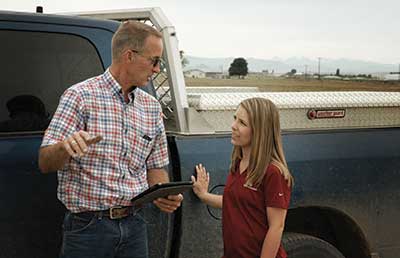
ag000930In a recent issue of Top Producer magazine, an article was written by Linda Smith about how agricultural managers are dealing with the Gen X and Gen Y generation.

I know that being a parent of 4 Gen Y boys that you need to deal with them differently from people from my generation (the baby boomers).

In dealing with Gen X workers, we need to realize that it is much more important for the boss to be a mentor or coach to their Gen X employees than just the “BOSS”.  If not, you will lose these workers extremely fast.  We also need to realize that Gen X are not wrong in this approach, but rather, this is what is important to them.  If we try to change them, we will fail.

For Gen Y workers, they have more of an entitlement mentality due to receiving trophies from simply participating in sports as kids and receiving stuff from their parents instead of time.  When they enter the work force, this transition from college can be tough on them.

They are more willing to accept authority, however, they are not really compliant.  They are results oriented, not process oriented.  Also, we need to realize that this generation grew up communicating more by text than face to face.  Therefore, it is unrealistic to restrict or eliminate their use of e-mail and texting. 

They want a coach and to be part of a successful team.  Make sure to be that coach for them.

Categories: Demographics, Farm Industry Trends, Farm Leadership

Do You Have Your Rip Cord

By Paul Neiffer | Trackback URL No Comments »

untitled

 Our CPA firm deals with many newly formed businesses each year.  When two or more people get together to form a business, it is almost like a boyfriend and girlfriend getting together for the first time.  They are usually fairly giddy with excitement over the new venture and look forward to the business being there forever.  However, like many human relationships, many of these unions will end in divorce and it can be painful.

I like to remind my clients that they need to be extremely diligent in building in a rip cord in case the business does not work out.  Just as in parachuting for the first time, the rip cord is designed to get you to the ground safely when things do not always work out.

In your business agreement, you need to make sure to document what will happen in the following situations:

  • What happens if one of the partners becomes disabled or dies?  Will you use life insurance to take care of these situations?
  • What happens if one or more of the partners goes bankrupt?
  • What happens if one of the partners decides to leave the business?  Are the remaining partners required to purchase the interest?  If so, what is the price and terms and how is it determined?  What if the parties can not agree on the price, how is that resolved?
  • What type of restrictions are built in to the transfer of interests?  If not handled correctly, you may end up new partner that you did not know about or want.

These are just some of  the issues that need to be built into the “rip cord” wording to make sure that it works.  Remember, in these situations it is almost always better to design the rip cord up front than to try to come up with the right one when it is too late.

Categories: Farm Leadership, Farm Operations, Legacy Planning

Lack of Data Dooms GRIP & GRP in 1000+ Counties

By Paul Neiffer | Trackback URL No Comments »

ag000162

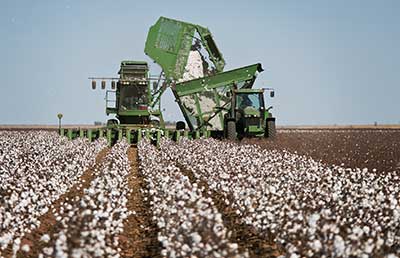
Marcia Taylor with DTN/The Progressive Farmer had a great post recently on the elimination of crop insurance under the Group Risk Income Protection (GRIP) and Group Risk Program (GRP) in over 1,000 counties across the US.  The primary reason for eliminating these counties were due to not reporting at least 30 yield reports or 25% of the acres for the county.  The USDA requires at least this amount of data in order to provide the insurance coverage.

Also, of the 1,062 counties that lost these insurance programs, only 310 counties were actually buying these types of insurance policies.  It appears that most of the counties affected were located in the South, Great Plains and Eastern part of the US.  Most the Mid West corn belt was not affected.  The decision eliminates this coverage for corn, soybean, grain sorghum, cotton and peanut producers.

Farmers in Lawrence County, Alabama say their maximum insurance yield reduced from 135 bushels per acre to only 60.  This insurance can be expensive.  GRIP with a harvest-price option cost $90 per acre as mentioned in the article, however, the return has been as high as $415 in 2007 and $222 in 2008 per acre for this particular county.  Payouts were as high as $614 per acre in Baca County, Colorado in 2008 largely due to the steep decline in corn prices.

However, these farmers need to realize they need to report their yields and if they do a good job of this, then the coverage will be available again.  The trends over time have shown that this coverage returns about $1.78 for every $1.00 of premium. 

GRIP has offered some of these growers superior coverage levels.  This coverage is no longer available and it may cost the farmers substantial losses to their bottom line.

Categories: Ag Policy, Demographics, Farm Operations, Farm Trends, Profit Center
Tags:

Strong Farmland Auction Prices Continue

By Paul Neiffer | Trackback URL No Comments »

imagesCACA1I9PMike Walsten from the “Your Precious Land” has posted recently that farmland sold at auctions are still enjoying high prices.

Mike also was interviewed on Ag Day last week and one of his interesting comments related to the trend of farmers in the metro Chicago area.  When pricing for development land was very high during the mid 2000’s, these farmers were able to sell their farm land for upwards of $15,000 an acre and then reinvest it tax-deferred under Section 1031 of the Internal Revenue Code.  They mostly reinvested in three or four times the land located in more rural areas.

Now, with the drying up of development potential, many of these farmers are now going back to the people they sold their land to for maybe $20,000 an acre and re-purchasing it for $5,000 to $7,500.  I think you will see this trend continue for a couple of more years.  Then, when the development trend starts again (and based upon a growing population, it will start again sometime), these same farmers might be able to sell the land for $20,000 an acre or more again.

It seems like some of the best investors over the last decade have been our farmers.  It has been a long-time since we could say that.

Categories: Farm Industry Trends, Farm Operations, Farm Taxes, Farm Trends
Tags:

Legacy by Design

By Paul Neiffer | Trackback URL No Comments »

barn-in-vermont

One of the shows that I have taped on my DVR each day is AgDay.  It comes on in the morning at 6 am and when I get home from work, that is usually the first thing that I watch on TV.  The parent of AgDay, Farm Journal Media has launched a new monthly TV show in conjunction with Pioneer Seeds called Legacy by Design.  It is hosted by my friend Kevin Spafford and the first inaugural show is on AgDay today. 

I look forward to watching the show and see how it evolves over time.  The Legacy by Design site is dedicated to helping farmers transition their farm operation from the current generation to the next or the ones after that.  As our farmers are aging, many of the children that used to hang around and farm are no longer doing that.  It is nice to see the ones that are.

Keep up the good work Kevin and staff and let’s see how the show grows.

Categories: Demographics, Farm Industry Trends, Farm Leadership, Retirement
Tags:

Hog Plant Closing = Higher Hog Prices?

By Paul Neiffer | Trackback URL No Comments »

78505-07apDoes the recent announced closing of the hog plant located in Sioux City, Iowa mean that hog prices will increase during 2010.  First, the closing will directly impact 1,500 workers and their families in the area.  Some of them may find work at other plants located in the area, but many will need to find new jobs which is tough in this still weak economy.

The Iowa Farm Outlook published a post on the expected impact in the area due to the closure.  The Sioux City plant processed approximately 4 million hogs each year and this is almost equal to the expected decline in hog production from 2008 to 2010.  Since this should more closely match hog processing capacity to production, this should result in an increase to hog prices in 2010.  Prices have already increased substantially from their early 2009 lows, but have much farther to go to get back to their highs.

I have posted before that hog farmers were probably losing at least $20 per hog grown in 2008 and 2009 due to high feed costs and low prices (part of it due to the Swine flu scare).  I believe that hog farmer profits in 2010 will be positive and if feed prices decline, they may make very good profits.

Although one plant is closing in the area, there are another 7 plants within 100 miles that process over 28 million head per year.  This is certainly an area with more hogs than people.

Categories: Demographics, Farm Operations, Profit Center
Tags:

What’s Your Basis

By Paul Neiffer | Trackback URL No Comments »

ag0010761

I am a firm proponent of using hedges to lock in your cost of production when you can.  However, you must not just look at what your commodity price is trading at on the relevant exchange.  You need to determine what your basis is and how it compares to the historical trends.

Basis is the difference between what your local elevator, ethanol plant or other buyer is willing to buy your crop for and what the price is on the exchange.  For example, assume you can sell your corn locally for $3.85 per bushel and on the exchange it is selling for $4.25.  Your basis is in this case a negative 40 cents. 

For growers that are far away from the end user of the product, their basis is normally quite negative compared to other growers.  This is due to the cost of shipping the product to market.  A grower with several ethanol plants competing for product will normally create the best basis for corn growers (in many cases you will have substantial positive basis, while a wheat grower in Montana that has to ship his product by rail to Seattle to ship it overseas will have a very negative basis).

After determining what your basis is, you need to review how the current basis compares to the trends over the last several years.  This comparison of the deviation from the normal trend will give you data as to whether you expect it to narrow toward or away from the exchange price.  This can effect whether you want to put on a hedge or use some type of forward contract.

The Kansas State University has a great Crop Basis and Deviation service that they provide on an almost weekly basis.  They provide a map for several mid-west states showing the current basis and the deviation from a three year average.  If you are in one of those states, bookmark this site and watch how your basis changes over time.   

As you become familiar with your basis, you will make more informed decision when and how to sell your crop.

Categories: Commodity Marketing, Profit Center
Tags:

Rural Broadband – Catching up to Urban Broadband?

By Paul Neiffer | Trackback URL No Comments »

k-1200-s2Sort of like the photo of my motorcycle at the left, broadband Internet services are much faster than dial up (or in my case a Harley).  Historically, the utilization of broadband Internet services in the rural sector has been much lower than urban areas.

In an article in the September, 2009 Amber Waves , several observations about these issues were made.  By 2007, about 82% of the homes that had Internet service were using a broadband connection.  However, only 70% of rural areas had broadband which is about 15% behind urban utilization.  Clusters of very low service are located in the Dakotas, eastern Montana and Oregon and northern Minnesota.

An interesting conclusion was that rural counties that had broadband service on a quicker basis than other rural counties ended up with better job and economic growth than those without starting in  2000.  This difference in growth rates ranged up to 2% more in 2005 and 2006 and income levels were almost 3% higher in certain years.  Broadband service allows rural America to compete with urban areas since communicating at broadband electronic speeds shrinks the miles to almost nothing from a business standpoint.

Urban areas with low income levels still had broadband coverage of about 75% while rural areas with the same income only had about 50% penetration.  The gap for higher income levels in rural versus urban areas were much lower.

I am firm believer that countries such as Korea (with some of the fastest broadband service in the world), China, Brazil etc. that are deploying fast broadband service will catch up and possibly pass us much faster than if they did not have broadband.  This world is getting much flatter and the rural parts of America are catching up, but still have a ways to go.

Categories: Ag Policy, Demographics, Farm Industry Trends
Tags:

Net Operating Loss – Do You Go Back or Go Forward

By Paul Neiffer | Trackback URL 1 Comment »

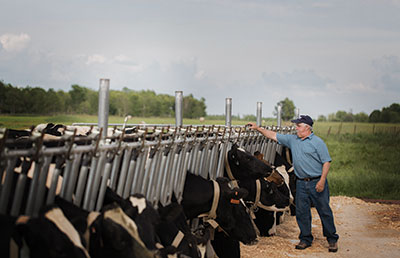
Dairy cows

Many dairy and other farmers will need to make a decision this year that they may not have had to make for several years.  I would say almost all dairy farmers for 2009 will have a tax operating loss and it may be substantial.  With a net operating loss, the tax laws allow you in most years to  either carry it back for two years or carry it forward for up to 20 years.

However, for farmers they can carry back their net operating losses for up to five years and if they have losses from other businesses for 2008 or 2009, they can carry those losses back for up to five years.

You need to review your actual income tax paid for the last five years.  You will need to determine the amount of tax actually paid and the overall tax bracket that you were in for each year and in total for the appropriate years.

  • You need to estimate what your income tax bracket will be over the next few years.  In general, if the prior years overall tax bracket is 15% or less and you expect to be in the 25% or higher bracket going forward, it makes more sense to carry it forward.
  • You need to review whether you took advantage of farm income averaging in those years and whether you will take advantage of it going forward. 
  • If the loss is very large and you need the cash, carry back the loss and what is left over can still be carried forward to 2010 and beyond.
  • You can elect to carry the non-farming loss back three, four or five years or the normal two.

If you make no election, then the loss is automatically carried back two or five  years.  To carry it forward, you must make an election with the tax filing.

Here is a link to the IRS website dealing with the net operating loss rules for farmers and other related farm tax publications and links.


Categories: Farm Leadership, Farm Taxes

Farm Debt Levels Are Increasing

By Paul Neiffer | Trackback URL No Comments »

rape-and-cottonwood

All in all, farm debt levels have increased, however, farmers have done a very good job of not letting these levels get out of control.

The United States Department of Agriculture has a very good print and online magazine called Amber Waves.  Each issue generally has several good articles related to farming and I would highly recommend reading it each month.

In the December issue, the an article on how farm debt has increased and shifted in the last few years was highly informative.  Here are the highlights of the article:

  • Farm debt levels have risen sharply in recent years, but the growth in farm asset values has outpaced the growth in debt. 
  • Fewer farms end the year with debt outstanding than in the past; debt is more concentrated in larger farms
  • Debt repayment capacity is expected to decrease this year, but remains well above levels seen in the later 1970s and early 1980s

US farm sector debt was estimated at $240 billion at the end of 2008, however it is expected to decrease by about $6 billion to $234 billion at the end of 2009.  Total farm assets are estimated at about $1.8 trillion for a debt to asset ratio of only 13%.  This ratio is about 2.7 times better than the low reached in the mid-1980s farm crisis.

In 1986, nearly 60% of farms reported having outstanding debt at the end of the year; by 2007, this figure had dropped to 31%.  Larger farms are more likely to use debt than smaller farms.  The majority of small farms indicated they have sufficient liquidity to finance their operations.  Livestock operations tend to have higher levels of debt than crop operations.

At the end of 2007, 65% of farmers reported having no outstanding on their business balance sheet, however, these farms only average about 258 acres in size.  14% of farms reporting between $1 and $5 million in sales also reported having no debt outstanding at year-end.

Farms that reported having multiple loans with multiple lenders only represented 6% of farms, however, they had more than 31% of total farm debt outstanding.

Farm debt has increased more slowly than income.  As a result, the ratio of debt to income has trended down from a ratio of five times annual farm income to less than three times annual income in 2007.

Debt repayment capacity utilization (DRCU) measures debt obligations in relation to maximum debt repayment capabilities.  The lower the DRCU number the better.  This measure has decreased from 27% in 2007 to about 18% in 2008.

Categories: Ag Policy, Demographics, Farm Industry Trends, Farm Trends, Profit Center
Tags: ,